How to Choose the Best Signage Company in Bangalore for Your Business
- September 15, 2026
- 5 min
Signage is often one of the first things people notice about a shop, office, restaurant or commercial building. It tells them where you are, what you offer and what kind of business they are about to enter. When the signage is difficult to read, poorly lit or made with the wrong material, it affects both visibility and the way people view the business.
Choosing a signage company is therefore not only about finding someone who can print a board and install it. The company must understand the site, recommend the right material, follow your brand design and complete the work without creating repeated delays or extra costs.
If you are searching for the best signage company in Bangalore, the following points will help you compare your options and make a sensible decision.
Start With Your Actual Requirement
Before contacting a signage company, write down what you need the signage to do. A name board placed above a retail store has a different purpose from a directory inside an office. One must attract attention from the road, while the other must help visitors find the correct room or floor.
Think about where the signage will be installed, how far away it should be visible, whether it will be viewed during the day or at night and how long you expect it to last. You should also consider whether the signage will be exposed to rain, dust and direct sunlight.
Having this information ready makes the first discussion more useful. It also helps the signage company suggest the right size, material, lighting and installation method.
Check Whether the Company Handles the Signage You Need
Not every signage company works with every type of signage. Some focus on printed boards and vinyl graphics. Others have experience with acrylic letters, metal signage, channel letters, modular signage, neon signage and digital displays.
Ask the company whether it has completed projects similar to yours. If you need signage for a hospital, hotel, store, corporate office or large commercial property, look for examples from comparable spaces. This gives you a better idea of whether the team understands the practical requirements involved.
A company with experience across different signage types may also help when the project contains several items. For example, an office project may require an exterior name board, reception signage, room signage, floor directories, glass frosting and safety signage. Working with one capable team can keep the design and finish consistent throughout the property.
Ask to See Real Project Work
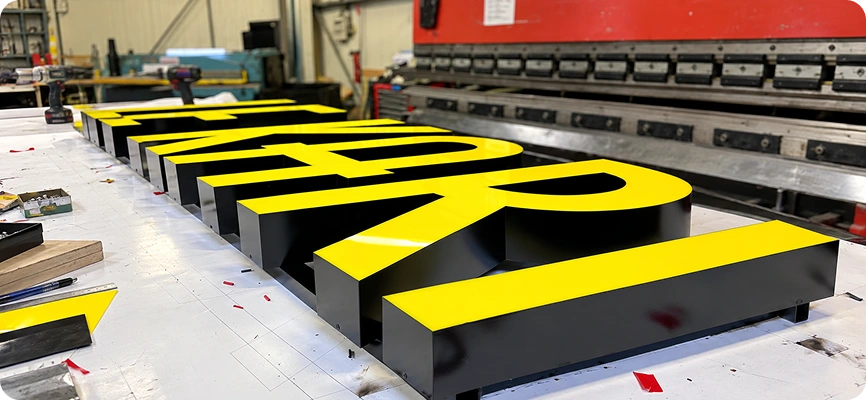
Product images and design mockups can look impressive, but they do not always show the quality of the finished installation. Ask for photographs or videos of completed projects. Look closely at the letter edges, spacing, alignment, lighting and overall finish.
For outdoor signage, check whether the structure appears strong and properly mounted. For illuminated signage, see whether the light is even across all letters. For printed graphics, inspect whether the colours look clear and whether the material has been applied without visible bubbles or folds.
You can also ask for examples that have been installed for some time. Signage may look good immediately after installation but fade, rust or loosen later if the materials and workmanship are poor.
The best signage company in Bangalore should be willing to show relevant work and explain how each project was produced.
Find Out What Is Made In House
Many signage projects involve several processes, including design, printing, cutting, fabrication, painting, electrical work and installation. Some companies complete most of this work at their own facility, while others depend heavily on outside vendors.
There is nothing wrong with using a specialist vendor for a particular task. However, you should know who is responsible for production and quality checks. When too many parts are sent to different vendors, communication can become slower and corrections may take longer.
An in house production facility generally gives the company better control over materials, colours, measurements and delivery schedules. It can also make customised work easier because the design and production teams can discuss changes directly.
Signageer states that it has its own production facility and machinery for signage, printing, metal laser cutting, acrylic cutting, CNC routing and fabrication. These capabilities are worth discussing if your project includes more than a basic printed board.
Discuss Materials in Detail
Two quotations may use the same words but refer to very different material quality. A quote that mentions only acrylic, steel, vinyl or LED lighting does not provide enough detail.
Ask about the thickness and grade of the material, the type of metal, the brand of vinyl, the printing method, the paint finish and the electrical components. If the signage will be outdoors, ask how the material will handle sun, rain and dust. If it will be installed indoors, check whether the finish suits the interior and is easy to maintain.
Material samples can be useful when colour, texture or transparency matters. For a large order, you may also request a sample letter or a small finished section before full production begins.
Make sure the final material specifications are written in the quotation. Verbal promises are difficult to verify after the work has started.
Review the Design Before Production
A logo file alone is not enough for production approval. The signage company should prepare a clear artwork proof or mockup showing the design, dimensions, colours and placement.
Check the spelling, contact details, logo proportions and spacing carefully. If the signage includes lighting, ask how it will look when illuminated. If it will be mounted on a wall or building, request a visual showing the proposed size in relation to the site.
It is common for a design to look balanced on a laptop screen but appear too small or crowded when placed on the actual building. A site based mockup helps avoid this problem.
Confirm who will approve the final design from your side. Production should begin only after the correct person has checked and approved all the details.
Insist on a Proper Site Survey
Measurements shared through photographs or messages may work for small temporary signage, but they are not enough for a larger installation. A site survey allows the team to confirm the available space, wall condition, electrical connection, viewing angle and access for installation.
The survey also helps identify problems early. There may be pipes or cables behind the wall, limited space for mounting, restrictions on drilling or a need for a ladder, scaffolding or lifting equipment.
For signage installed at height, safety planning is especially important. Ask who will manage access equipment and whether the installation team follows the required safety practices.
The final quotation should be based on confirmed site measurements, not rough estimates.
Compare the Complete Cost, Not Just the Final Number
A low quote may leave out transport, installation, electrical work or access equipment. These charges can appear later and make the project more expensive than expected.
Ask for a detailed quotation that mentions the quantity, dimensions, materials, lighting, production, delivery, installation and taxes. It should also state what is not included.
When comparing companies, make sure each quote covers the same specifications. Signage made with a thinner sheet, a different vinyl brand or lower quality electrical components may naturally cost less, but it may not offer the same finish or life.
Price matters, but it should be considered along with material quality, production control, installation experience and service support.
Confirm the Production and Installation Schedule
Signage is often needed before a store opening, office launch or event. A missed date can create problems for several other teams. Ask the company to provide a clear schedule for design approval, production, delivery and installation.
Allow enough time for revisions and material approval. If the project has a fixed deadline, mention it during the first discussion rather than after the order is placed.
For large projects, request progress updates at agreed stages. Photographs from the production facility can help you see whether the work is moving according to schedule and whether the finish matches the approved design.
Ask About Installation Responsibility
Good production can still result in a poor final outcome if the installation is not handled correctly. The signage must be aligned, securely fixed and connected safely.
Check whether installation is handled by the company’s own team or another vendor. Ask what preparation is required at the site and who will manage electrical connections, wall repairs and access equipment.
After installation, inspect the signage from different distances and angles. Check the alignment, visible wiring, lighting, finish and mounting. Any issue found during handover should be recorded and corrected.
Understand the Warranty and Service Support
Good production can still result in a poor final outcome if the installation is not handled correctly. The signage must be aligned, securely fixed and connected safely.
Check whether installation is handled by the company’s own team or another vendor. Ask what preparation is required at the site and who will manage electrical connections, wall repairs and access equipment.
After installation, inspect the signage from different distances and angles. Check the alignment, visible wiring, lighting, finish and mounting. Any issue found during handover should be recorded and corrected.
Look at Communication During the Quotation Stage
The way a company communicates before receiving the order often tells you how it will handle the project later. Notice whether the team asks relevant questions, responds clearly and documents what has been discussed.
Be cautious if the company sends a price without understanding the site or materials. A responsible team may take more time to prepare the quotation because it needs to confirm details first.
You should know who will manage the project, who will approve the design and whom to contact during production and installation. Clear responsibility prevents small issues from becoming long delays.
Why Signageer Can Be Considered for Commercial Signage in Bangalore
Signageer works on customised signage, printing, digital displays, branding and fabrication requirements. Its listed services include acrylic signage, metal letters, channel letters, modular signage, digital kiosks, LED screens, video walls, wall branding, glass frosting and large format printing.
The company also states that it has more than 13 years of experience and its own production facility. For businesses that require several signage and printing processes, this can make coordination simpler and give the team greater control over production.
The right choice will still depend on your project, site, budget and deadline. Share a detailed requirement, review relevant work, confirm the materials and ask for a complete written quotation before making your decision.
Final Thoughts
Finding the best signage company in Bangalore is not about selecting the first vendor who offers a quick quote. It is about checking whether the company understands your purpose, has relevant production experience, uses suitable materials and takes responsibility for installation and support.
Spend time reviewing the design, specifications, site requirements, cost and warranty before approving the order. A careful selection process reduces confusion and gives you a better chance of receiving signage that looks right and performs well at the location.
If you are planning signage for a shop, office, restaurant, hospital or commercial property, contact Signageer to discuss your requirement and request a quotation based on your site and business needs.
Share
Get my Quote
Everything You Need to Know Before You Start