What Is Vinyl Printing? Types, Process, Uses and Benefits
- November 24, 2026
- 10 min
What Is Vinyl Printing?
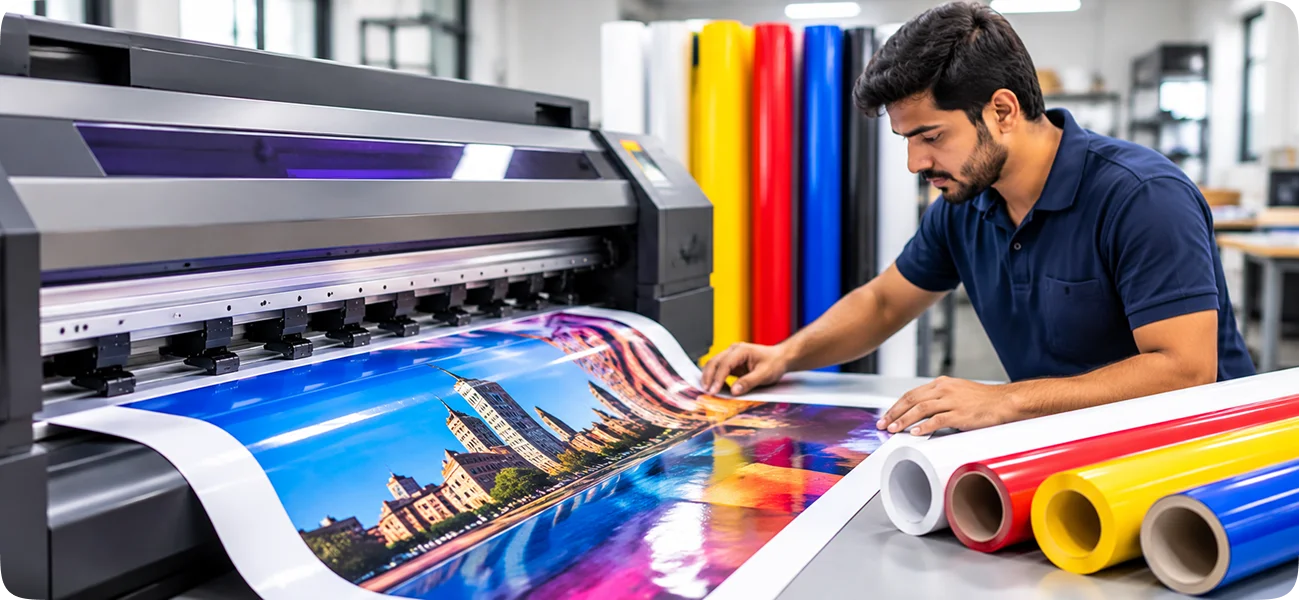
Vinyl printing is a process of printing designs, images, text and logos onto vinyl sheets or rolls using specialised printers and compatible inks. The printed material can be cut into different shapes and sizes, then applied to surfaces such as glass, metal, walls and signboards.
Vinyl is a synthetic material commonly made from polyvinyl chloride (PVC). It is available in different thicknesses, textures, finishes and adhesive options. Based on the application, it generally falls into two categories:
- Adhesive vinyl: This has a pressure-sensitive backing that sticks to a surface. It is commonly used for stickers, window graphics, vehicle branding and wall decals.
- Non-adhesive vinyl: This does not have a self-adhesive backing. It is used for applications such as banners and display graphics that need separate mounting or support.
The printer also plays a role in the finished output. Eco-solvent, UV and latex printers use different ink technologies to print on compatible vinyl materials.
What Are the Different Types of Vinyl Printing?
Vinyl printing methods differ in how they apply and cure ink. Each method suits different materials, designs and production needs. Here are four commonly used methods.
1. Eco-Solvent Vinyl Printing
Eco-solvent printing uses solvent-based inks with lower volatile organic compound (VOC) levels than traditional solvent inks. These inks produce detailed images and strong colours on compatible vinyl.
It’s commonly used for vehicle graphics, outdoor signage, stickers and promotional displays. Prints need enough drying time before lamination or installation, particularly for outdoor applications.
2. UV Vinyl Printing
UV printing uses ultraviolet light to cure ink as it’s applied to the vinyl. The ink sets quickly, producing sharp text, detailed graphics and vibrant colours.
It’s used for stickers, labels, signage and promotional graphics. Some UV printers also support white ink, which creates an opaque base on transparent vinyl and makes designs more visible on glass.
3. Latex Vinyl Printing
Latex printing uses water-based inks that are cured with heat inside the printer. It’s compatible with various vinyl media and is commonly used for wall graphics, banners, vehicle advertising and indoor or outdoor signage.
Its low-odour output makes it suitable for many indoor applications. However, the vinyl must be compatible with the printer and the intended use.
4. Screen Printing on Vinyl
Screen printing transfers ink onto vinyl through a fine mesh screen. Each colour usually requires a separate screen, and the inks are applied in layers to create the design.
It’s well suited to large runs of identical designs, such as decals, labels and promotional graphics. It also helps maintain consistent colours across multiple copies.
What Are the Different Types of Vinyl Materials?
The printing method and vinyl material are two separate things. While the printing method determines how the design is produced, the material affects flexibility, adhesion and suitability for different surfaces.
Some commonly used vinyl materials include:
| Vinyl material | Key characteristics | Common applications |
|---|---|---|
| Calendered vinyl | Generally economical and suitable for flat or slightly curved surfaces | Signboards, stickers and promotional graphics |
| Cast vinyl | Thin and flexible, allowing it to conform to complex curves | Vehicle wraps and curved surfaces |
| Perforated vinyl | Contains small holes that allow visibility through the material | Vehicle and storefront windows |
| Reflective vinyl | Reflects light when illuminated | Safety signs and vehicle graphics |
| Transparent vinyl | Allows light to pass through the material | Glass graphics and window displays |
Self-adhesive vinyl is also available with permanent and removable adhesives. Permanent adhesive is suitable for graphics intended to stay in place, while removable options are useful for temporary promotions and displays.
What Are the Common Uses of Vinyl Printing?
1. Business Signage and Advertising
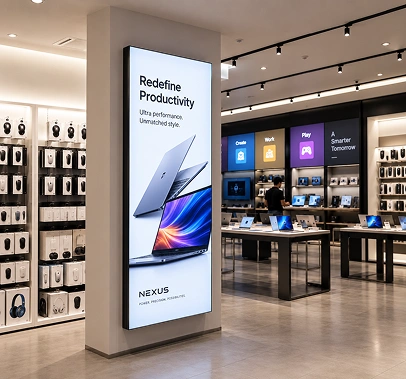
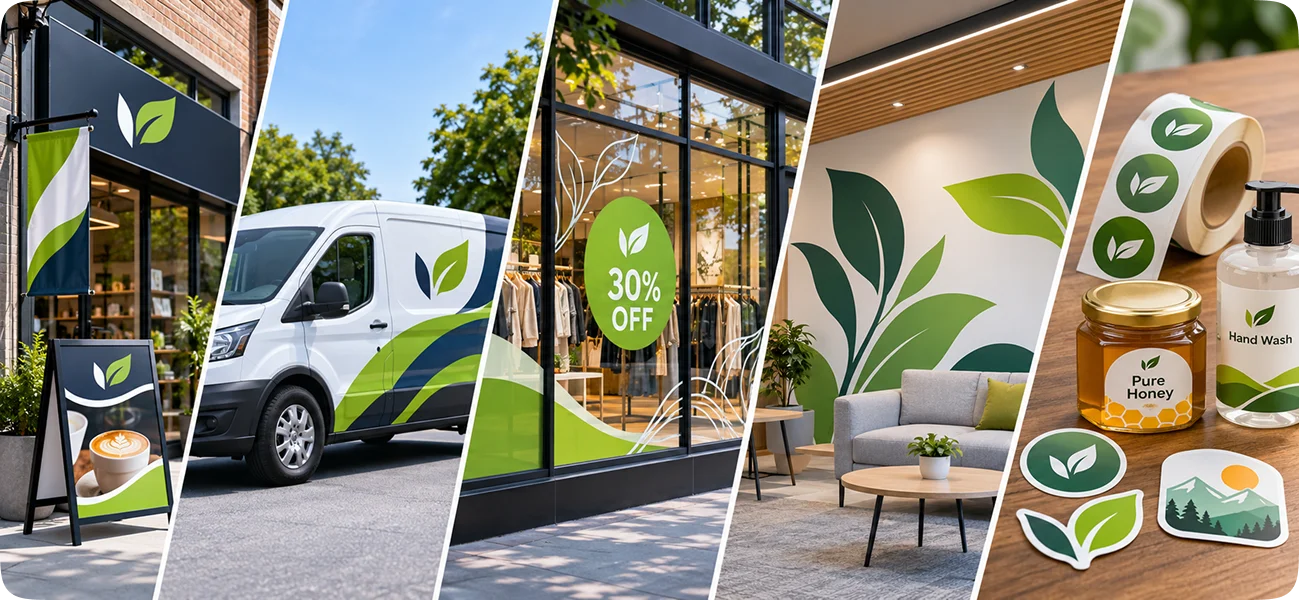
Printed vinyl is used for shop signs, promotional banners, billboards and display boards. Businesses can use it to showcase their logos, contact details, products and advertising messages. Outdoor-grade vinyl is suitable for signage exposed to sunlight and changing weather conditions.
2. Vehicle Branding
Cars, buses, vans and commercial vehicles can carry printed vinyl graphics featuring company logos, contact information and promotional designs. Cast vinyl is commonly used for vehicle wraps because it can conform to curved body panels.
3. Storefront and Window Graphics
Retail stores use vinyl graphics for window displays, promotional offers, opening-hour information and branding. Perforated vinyl is also used on certain windows where visibility from inside needs to be maintained.
4. Interior Decoration
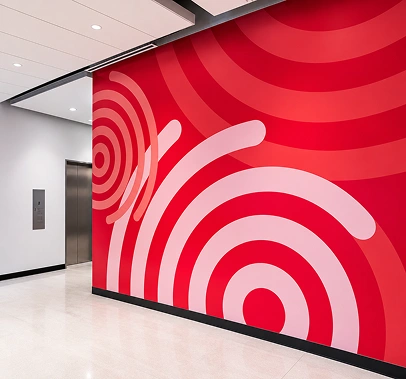
Printed vinyl is used for wall murals, decorative panels, furniture wraps and customised wall graphics. Offices, retail outlets, hotels and homes can use these prints to display designs or brand elements across interior spaces.
5. Stickers, Labels and Decals
Custom vinyl stickers are used for product identification, packaging, equipment labels and promotional giveaways. They can be printed in different shapes and sizes to suit the product or branding requirements.
What Are the Benefits of Vinyl Printing?
Vinyl printing is useful for projects that require customised graphics, flexible material options and printing on different surfaces. Its main benefits include:
- Long-lasting prints: Suitable vinyl and ink combinations can retain their appearance for years, depending on exposure, installation and maintenance.
- Outdoor suitability: Outdoor-grade vinyl can withstand moisture and sunlight, making it useful for exterior signage and vehicle graphics.
- Custom designs: Businesses can print logos, photographs, text and promotional artwork in different colours, shapes and sizes.
- Multiple applications: Vinyl can be used on compatible surfaces such as glass, metal, walls, signboards and vehicles.
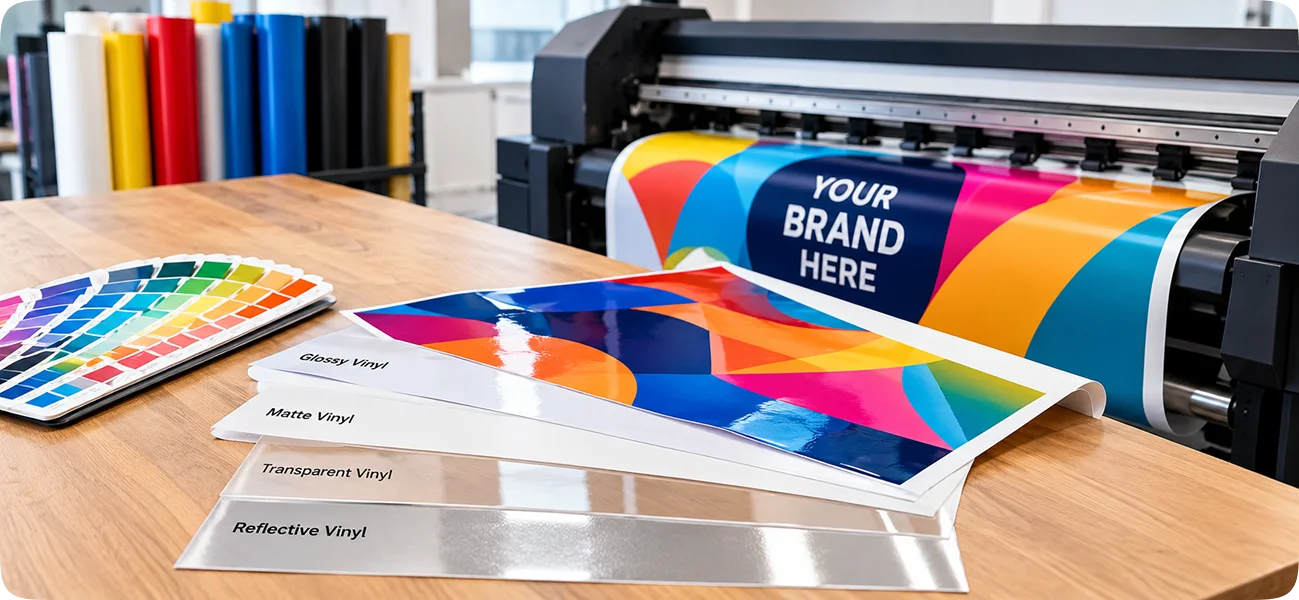
- Different finishes: Matte, glossy, transparent and reflective options allow businesses to achieve the finish required for their graphics.
- Flexible order quantities: Digital vinyl printing supports customised designs and smaller orders, while screen printing can be suitable for larger repeat runs.
- Convenient installation: Self-adhesive vinyl can be applied directly to prepared surfaces. Removable options also make it easier to replace temporary graphics.
The actual performance depends on the vinyl grade, adhesive, ink, protective finish and installation quality. These factors should be considered before finalising a print.
How Do You Choose the Right Vinyl Printing Option?
Before placing a vinyl printing order, consider where the graphic will be installed and what it needs to withstand. These details help determine the right material and printing method.
- Intended use: Identify whether you need vehicle graphics, window stickers, outdoor signage, wall graphics or product labels.
- Surface type: Check whether the vinyl will go on glass, metal, painted walls or curved surfaces. The adhesive must be compatible with the surface.
- Exposure: Outdoor graphics need suitable UV and weather resistance. Indoor applications may have different material requirements.
- Required lifespan: Decide whether the graphic is temporary or intended for long-term use. This helps determine the adhesive and material grade.
- Print finish: Choose matte, glossy, transparent or reflective vinyl according to the design and viewing conditions.
- Production requirements: Consider the print size, quantity, cutting, lamination and installation costs when setting your budget.
A printing provider can help you select the right combination based on the artwork, surface and intended use.
Conclusion
Vinyl printing offers a practical way to create signage, vehicle graphics, banners, stickers and decorative displays. The right combination of printing method, vinyl material, adhesive and finish determines how well the graphic looks, adheres and holds up over time.
Signageer provides vinyl printing solutions for business signage, promotional graphics and customised stickers. Contact Signageer to discuss your design, choose compatible materials and get prints that meet your project requirements.
Share
Get Free Quote
FAQ About
Vinyl Printing